Thai Phrases for Travel: Food, Taxis, Shopping and Hotels
The Thai phrases you will use most on a trip: asking the price, bargaining, ordering food not spicy, taking a taxi, the hotel and asking the way, with audio.
·Thai Trainer·Vocabulary

You do not need to speak Thai to travel around Thailand, but a handful of phrases changes the trip: paying a fair price at the market, eating without your mouth on fire and getting the taxi to use the meter. Almost all of them are built from four pieces, and once you recognise those you also understand what people answer.
End every phrase with , khrap, if you are a man, or , kha, if you are a woman. The article on Thai greetings explains why.
The words you will see everywhere
Four pieces to build almost anything
- , mai, at the end turns a sentence into a question. , mi wai fai mai: is there wifi?
- , dai mai, means "is it possible?". It asks for almost anything: , lot dai mai, can you give me a discount?
- , thao rai, means "how much?". It goes after the thing you are asking about: , khuen la thao rai, how much per night?
- , yu thi nai, means "where is?". It goes after the place: , talat yu thi nai, where is the market?
Put , kho, in front to ask for something politely, and , noi, at the end to soften it, a bit like "please": , kho menu noi, can I have the menu?
Shopping and bargaining
You bargain at markets and street stalls; in shopping malls, at 7-Eleven and anywhere with marked prices, you do not. Do it with a smile and without rushing: the first price leaves room, but haggling hard over something already cheap comes across badly.
If you do not catch the number, ask for it to be written down or shown on a calculator. For handwritten prices, which sometimes use Thai digits, see the article on Thai numbers.
At the restaurant
Thai chilli is not the chilli of a Thai restaurant back home. If you are not used to it, , mai ao phet, not spicy, is probably the most useful phrase of the whole trip. Even so, expect some heat: "not spicy" does not always mean none.
If you do not eat meat, , mi ahan mangsawirat mai, asks whether they have vegetarian food. And to ask for the bill, , kep tang duai.
Spaced repetition schedules each letter for the day you need it. Free, no card, no time limit.
Practise this in the appTaxis, tuk-tuks and trains
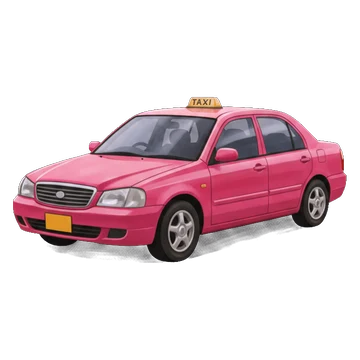
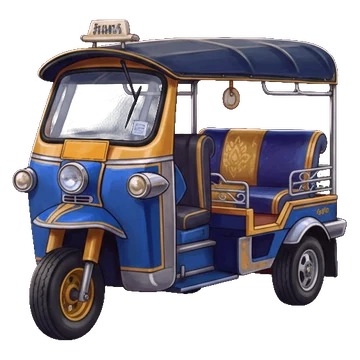
Bangkok taxis have meters, but with tourists drivers sometimes offer a higher fixed price instead. , poet mitoe duai, asks them to switch it on; if they will not, you can take the next one. Tuk-tuks have no meter: agree on the price before you get in.
To avoid the haggling, many travellers use ride-hailing apps such as Grab, with the fare set before the ride. And to get around central Bangkok, the skytrain, , rot fai fa, skips the traffic.
At the hotel
Big hotels speak English, but in a small guesthouse or away from the tourist areas these phrases clear things up. , fak krapao dai mai, is the one for when you arrive before check-in or leave after check-out.
Asking the way
, hong nam yu thi nai, where is the toilet?, is the one you will use most. And if you get lost, showing the address on your phone works better than pronouncing the street name: Thai names written in Latin letters rarely sound the way they read.
If something goes wrong
Thailand has a tourist police that answers in English: call 1155. The number for medical emergencies is 1669, and for the police, 191.
Test yourself on the phrases
Try it yourself
Answer without scrolling back. These are the words this article just covered.
Keep going with the full alphabet, audio for every character and quizzes that come back when you are about to forget.
Create a free accountWhere to go next
Travel phrases are easier to remember when you see them written, and in Thailand they are everywhere: signs, menus, train tickets. Being able to read, even slowly, lets you order from a menu with no pictures and recognise the name of your stop. How to read the Thai alphabet is the place to start.
Thai Trainer teaches more than 500 phrases with recorded audio, grouped by topic: food, shopping, transport, hotel, directions and emergencies, alongside the full alphabet.