Khrap or Kha? Thank You in Thai for Men and Women
Thank you in Thai is ขอบคุณ, khop khun, plus khrap if you are a man or kha if you are a woman. What khrap and kha mean, when to use each, and how to answer.
·Thai Trainer·Vocabulary

Thank you in Thai is , khop khun. A man says , khop khun khrap, and a woman says , khop khun kha. and are politeness particles: they add no meaning, only courtesy, and which one you use depends on who is speaking, not on who you are talking to.
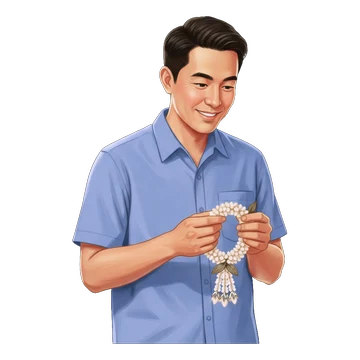


Khrap or kha: it depends on the speaker
The rule fits in one line: men say , women say , whoever they are talking to. A woman thanking a man says ; a man thanking a woman says .
The particle goes at the end of almost any sentence, not just thank you. It is what turns a plain sentence into a polite one:
You can drop it with close friends, but with strangers, in shops, at the hotel or with anyone older than you, a sentence without it sounds curt. When in doubt, add it.
On the street you will often hear men say khap instead of khrap: the r disappears in fast speech. Both are fine, but is how it is written.
The particle follows the speaker's gender identity, which is why you may hear some men use . Nobody will correct you for using the one that matches you.
Kha has two spellings
Women use two versions of the particle, and the difference is the tone:
| Thai | When | Tone |
|---|---|---|
| statements | falling | |
| questions | high |
So a woman says , with the voice going down, but asks a question with , with the voice going up. also follows , na, which softens a request: .
Men have it easier: is the same in statements and questions. If tones are new to you, The tones of Thai explains what falling and high mean.
Thank you, from casual to formal
is the everyday thank you and works with everyone. There are a few variants worth knowing:
| Thai | When | Romanization |
|---|---|---|
| thank you very much | khop khun mak | |
| to someone younger | khop chai | |
| very formal | khop phra khun |
, with , mak, very, is the one to use when someone has really helped you. To say what you are thanking someone for, add the reason after it:
sounds friendly from an older person to a younger one, but said to a waiter or someone older it can come across as condescending. is kept for elders, speeches and letters. As a visitor, stick to .
Spaced repetition schedules each letter for the day you need it. Free, no card, no time limit.
Practise this in the appHow to answer a thank you
When someone thanks you, the usual answer is , mai pen rai: never mind, it was nothing. It is probably the phrase you will hear most in Thailand. A warmer option is , yin di, my pleasure. Both take the particle:


Khrap and kha also mean yes
On their own, and work as a polite yes or "I'm listening". When a waiter repeats your order, a or a is enough to confirm it. On the phone, Thais say it every few seconds to show they are following.
Men also say , khrap phom, a more emphatic yes, often heard from staff. , phom, is "I" for a man, and it is not the only gendered word: a woman says , dichan, in formal speech, or , chan, with friends.
Watch the ph: it is a p with a puff of air, never an f. sounds like pom, not fom, just as Phuket is said Puket.


Test yourself on thank you and the particles
Try it yourself
Answer without scrolling back. These are the words this article just covered.
Keep going with the full alphabet, audio for every character and quizzes that come back when you are about to forget.
Create a free accountWhere to go next
With , or and you can already be polite anywhere. Thai greetings adds hello, sorry and goodbye, and Thai travel phrases puts the particles to work in shops, taxis and restaurants.
Thai Trainer teaches these words and more than 30 greeting phrases with recorded audio, alongside the full alphabet. The greetings category is free, with no time limit.