Thai Greetings: Hello, Goodbye, the Wai and What Kha Means
How to say hello, sorry and goodbye in Thai, ask how someone is, introduce yourself and do the wai, with khrap or kha by speaker and audio for every word.
·Thai Trainer·Vocabulary
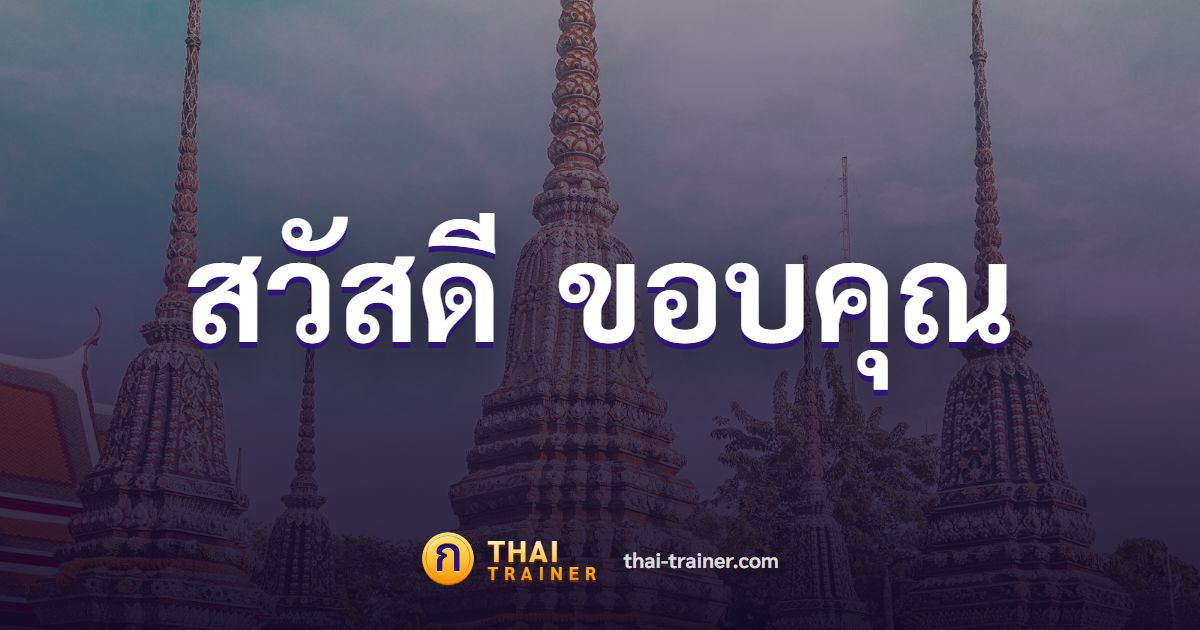
Hello in Thai is , sawatdi, and it doubles as goodbye. It almost always comes with a politeness word on the end: , khrap, if the speaker is a man, and , kha, if the speaker is a woman. Add thank you (, khop khun) and sorry (, kho thot) and you can greet people politely anywhere in Thailand.
The basic words


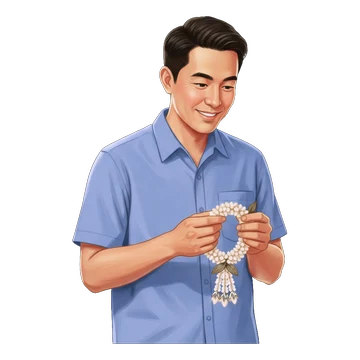


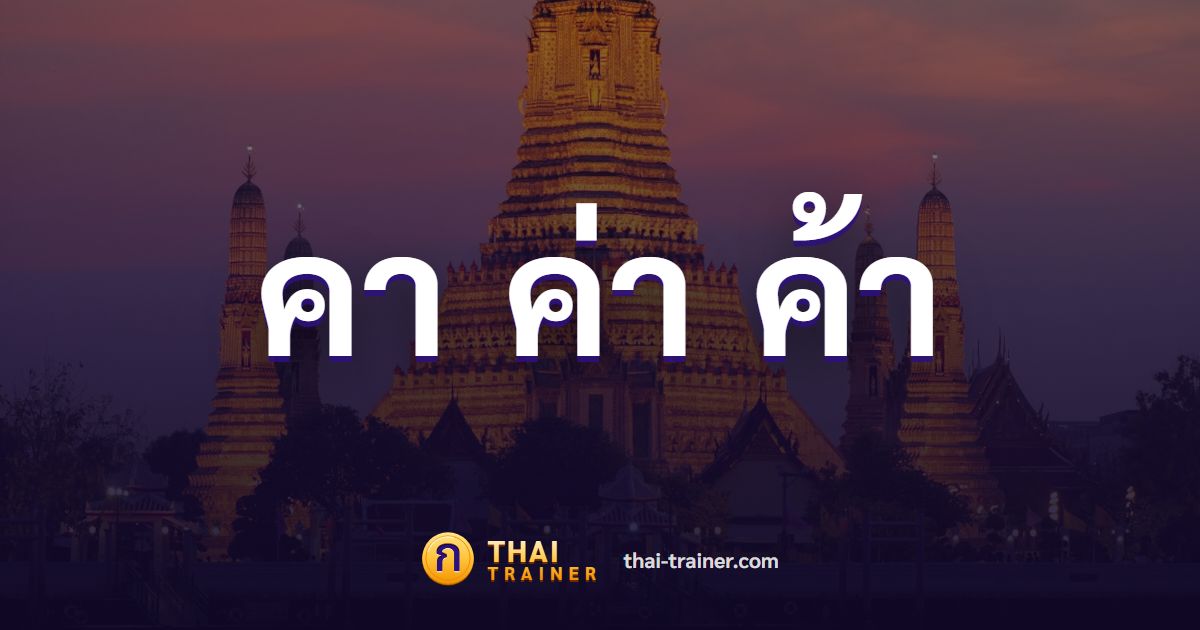
Khrap and kha: it depends on who is speaking
and mean nothing on their own. They are politeness particles that go at the end of a sentence to make it sound friendly, a bit like a "please" that follows almost everything.
The rule is simple: what counts is who is speaking, not who is listening. A man says to everyone; a woman says to everyone. You can leave the particle off with friends, but with strangers, in shops or at the hotel, a sentence without it sounds curt.
The two spellings of kha, why you will hear khap and how to say thank you as a man or a woman are all in Khrap or kha?.
How to do the wai
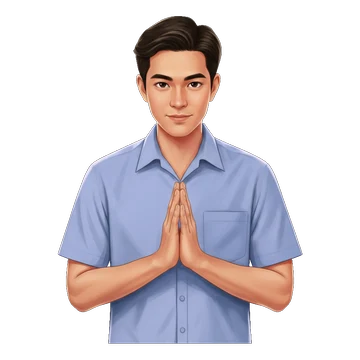
The Thai greeting is not a handshake but the wai: palms pressed together at chest height and a slight bow of the head, while you say .
- The younger person, or the one of lower rank, wais first. The other returns it.
- The higher the hands, the more respect. Chest height works for almost everyone; monks are greeted with the hands held higher.
- If shop or hotel staff wai you, a smile and a nod is enough in return. Returning the wai is fine too.
If you are unsure what to do, a with a smile is always right.
Spaced repetition schedules each letter for the day you need it. Free, no card, no time limit.
Practise this in the appThank you, sorry and "never mind"
, khop khun, is thank you. To really mean it, add , mak, very much: or .
, kho thot, works both as sorry and as a way to get someone's attention, like "excuse me" in English.
And the answer to either is , mai pen rai: never mind, you're welcome, no worries. It is probably the phrase you will hear most in Thailand, because it sums up an attitude: not making a fuss over small mishaps.
How are you?
To ask how someone is, say , khun sabai di mai. The usual answer is , sabai di, I'm fine, with its particle.
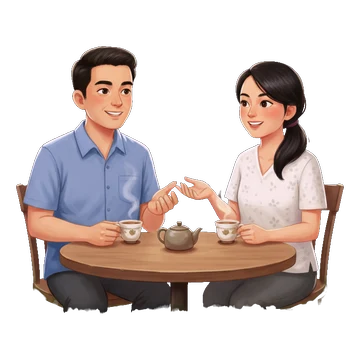

Between people who know each other, , pen yang ngai bang, is more common: "how's it going?". is a little formal, but nobody will find it odd if you use it.
Introducing yourself
These phrases let you introduce yourself, say where you are from and ask for patience with your Thai:
To give your name, say , chue, plus the name: , chue Maria. There is no need to say "I": Thai leaves it out when it is obvious.
Saying you are learning Thai usually gets a conversation going. Be ready to hear , khun phut phasa Thai keng mak: you speak Thai very well, even if all you said was hello.
Saying goodbye
works as goodbye too, but there are more natural options:
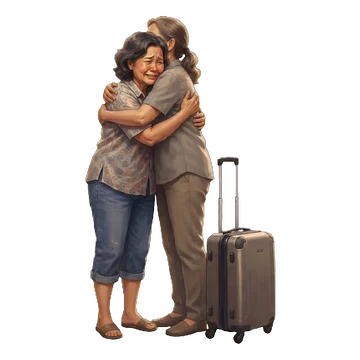


, la kon, is a goodbye with a feel of parting for a long time; day to day you will hear , laeo choe kan, see you, more often. And , chok di, good luck, is a warm way to see someone off on a trip.
Test yourself on the greetings
Try it yourself
Answer without scrolling back. These are the words this article just covered.
Keep going with the full alphabet, audio for every character and quizzes that come back when you are about to forget.
Create a free accountWhere to go next
Greetings are the ideal place to start reading, because you already know what they say. Look at : the s at the start is , the a is hidden between the first two letters, and is the long i at the end. How to read the Thai alphabet explains how to work out a word like that. And if you are planning a trip, the Thai travel phrases pick up where greetings leave off.
Thai Trainer teaches these words and more than 30 greeting phrases with recorded audio, alongside the full alphabet. The greetings category is free, with no time limit.